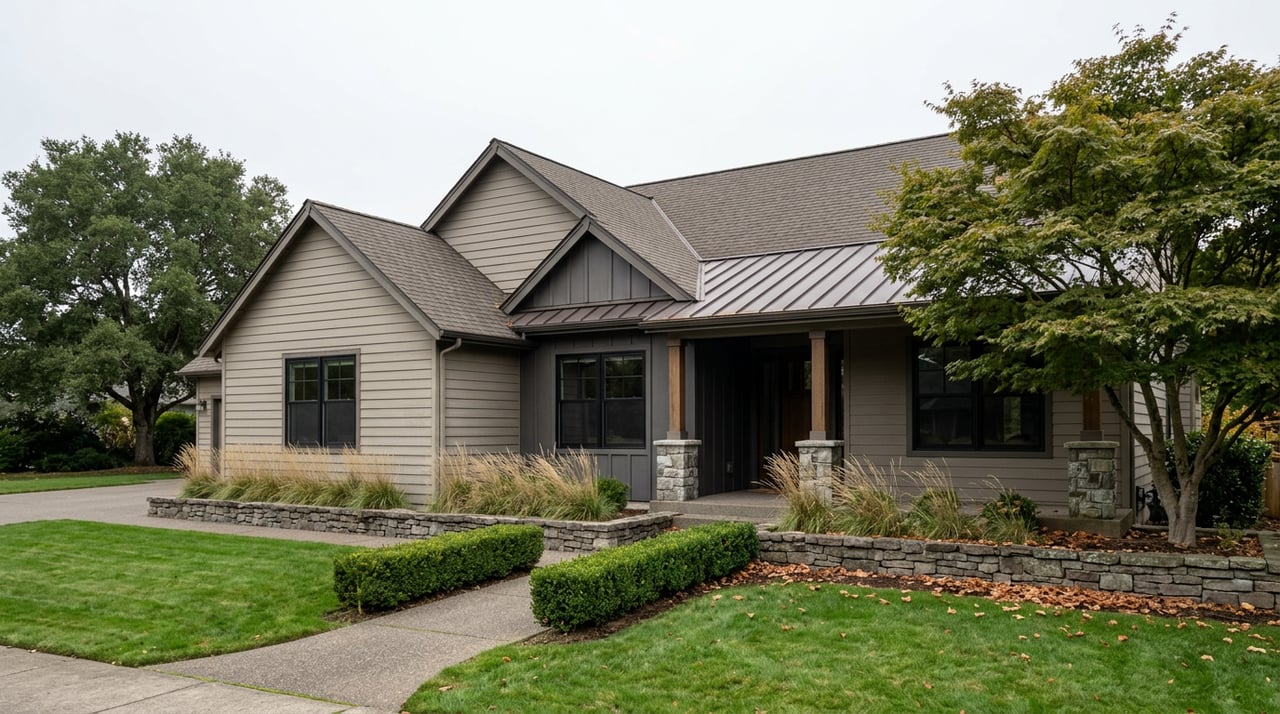
In December 2025, homes across Mountain View spent an average of two days on the market before going into contract. That is not a typo and it is not a typical spread between offer and acceptance. That means most buyers who won a home that month had to have their financing, their inspection strategy and their offer terms locked before the listing even had a chance to breathe. There was no weekend to sleep on it.
That single number, reported by the Mountain View Voice using December 2025 California Association of Realtors data, is the kind of detail that changes how a buyer should prepare. But it also hides something the median price alone never tells you: that two-day pace belongs almost entirely to detached single-family homes. Attached housing in the same city, the same month, was behaving nothing like it. Buyers comparing Mountain View to other South Bay cities on a portal's median-price chart are looking at one number that is actually describing two markets moving at different speeds, for different reasons, toward different outcomes.
Two Days Is a House Number, Not a City Number
The Voice's December snapshot didn't just report Mountain View's average time on market at two days. It noted that Mountain View and Los Altos were the exceptions to a broader Midpeninsula pattern, with fewer buyers elsewhere paying over asking while these two cities saw competition tighten instead. Mountain View's median price per square foot in that same month came in at $1,665, and homes spent roughly 48 fewer days on the market than in the same month a year earlier. That is not a market cooling into winter. That is a market accelerating in the segment buyers want most.
Attached housing tells a different story in the same window. Local transaction data compiled for early 2026 showed townhomes trading at prices running roughly 4 percent below their original list price, a pattern distinct enough from the detached segment that anyone shopping only by city-wide median would miss it entirely. Condos and townhomes were still selling, and inventory in that segment was easier to find, but sellers of attached product were adjusting price to move it. Sellers of detached houses were not.
This split shows up again at the ZIP code level. December 2025 data put the 94041 area, Mountain View's older downtown core near Castro Street, at a median around $2.12 million. Central Mountain View in 94040 came in near $1.38 million. The North Bayshore-adjacent 94043 area, closer to the office corridor along Highway 101, sat near $1.26 million.
| ZIP Code | General Area | Median Price (Dec. 2025 snapshot) |
|---|---|---|
| 94041 | Old Mountain View / downtown core | ~$2.12 million |
| 94040 | Central Mountain View | ~$1.38 million |
| 94043 | North Bayshore-adjacent / Whisman | ~$1.26 million |
That is not a modest spread. It is nearly $900,000 between two ZIP codes in the same small city, and it reflects lot size, proximity to downtown, and housing stock age as much as anything else. A buyer anchored to one city-wide median has no way to see that variance coming.
North Bayshore Housing Is Planned Over Decades
Palo Alto Online reported on the city council's June 2023 approval of Google's 153-acre North Bayshore Master Plan along Shoreline Boulevard. Ask any agent why Mountain View's detached inventory stays this tight and the answer usually points north. The plan, done in partnership with Lendlease, calls for up to 7,000 new residential units built out over 30 years, with 15 percent designated affordable. It is the largest development the city has ever approved, and it is the reason many buyers assume relief is somewhere on the horizon.
The plan's progress since 2023 offers context for what buyers may expect. The original 2021 version of the plan targeted 1,400 affordable units out of the 7,000. By the time the master plan reached its March 2023 revision, the proposal included 350 fewer inclusionary units, leaving 1,050. This revision came before construction began.
Since then, other North Bayshore plans involving Google have also changed. Palo Alto Online reported that in 2024, the company terminated a separate 41-acre office project in North Bayshore known as Google Landings, citing what it called a measured approach to matching real estate investment with current business needs. Then in 2025, Palo Alto Online reported that Google was looking to sell off its Middlefield Park property, a parcel that had carried a proposed 2.4-acre land dedication for roughly 380 affordable units. Google did not respond to the paper's questions about what would happen to that dedication once the land changed hands. A city spokesperson told the paper the city still expects residential development in North Bayshore to move forward. That expectation may hold. Over the past two years, changes to related projects have made the timing and scope of future housing less certain.
None of this means North Bayshore's housing will never arrive. It means the 30-year build-out timeline that was baked into the plan from the start has, if anything, gotten less certain since 2023, not more. For a buyer weighing whether to wait out today's detached-home competition for a future wave of supply, the plan's build-out was always measured in decades, and some nearer-term elements have changed since 2023.
Demand Isn't Waiting Either
While the timing and scope of planned housing remain uncertain, demand across the wider Midpeninsula has kept climbing into the fall. A Mountain View Voice report from early September 2026 pointed to a new wave of buyers entering the region driven partly by AI-sector wealth and partly by employers tightening return-to-office schedules, pulling workers back from places like Seattle. The same report cited Associated Press data showing San Francisco metro luxury-home sales rose 39.3 percent in the first half of 2026 compared to the year before, well ahead of the 15.1 percent increase in middle-market sales, even as mortgage rates for fixed-rate loans sat in the 6 to 7 percent range this fall.
That luxury-versus-middle-market gap is the same bifurcation showing up at the city level in Mountain View, just measured a different way. Buyers with cash or equity from recent liquidity events are competing hardest for the scarcest, most desirable product, whether that product is a $20 million estate in Atherton or a well-located detached house in Mountain View's 94041. Buyers working with a standard mortgage at today's rates are the ones more likely to find room in the attached segment, where price cuts are actually happening.
What This Means If You're House Hunting Here
The practical takeaway is not that Mountain View is uniformly hot or uniformly soft. It is that the two products inside its city limits require two different strategies.
- If you want a detached house, plan to be fully underwritten before you tour, not after. An average two-day time on market leaves no room to shop for a lender mid-process.
- Expect to compete on terms as well as price in the detached segment. Waiving an inspection contingency is common in this pace of market, but it shifts real repair risk onto the buyer after closing.
- If you're open to a condo or townhome, use the documented discount pattern as leverage. Sellers in that segment have been adjusting price rather than waiting out a bidding war.
- Treat ZIP code as a starting filter, not an afterthought. The nearly $900,000 spread between 94041 and 94043 in the December 2025 snapshot is wide enough to change what's realistic at your budget.
- Don't build a five-year plan around North Bayshore supply arriving on any specific timeline. A separate office project was terminated, while Google later looked to sell Middlefield Park and the future of its proposed dedication was unclear; the build-out was always measured in decades.
Frequently Asked Questions
Will North Bayshore ever bring new housing to Mountain View? The city continues to expect residential development to move forward on the site, according to city officials cited by Palo Alto Online. But the timeline was a 30-year build-out from the start, and Google terminated a separate office project while later looking to sell Middlefield Park, where the future of a proposed affordable-housing dedication was unclear in the report.
Is a condo or townhome a better entry point right now? Based on the transaction pattern seen in early 2026, attached housing has offered more room to negotiate than the detached segment, where price cuts have been rare. That gap is worth discussing with an agent who can pull current comps for your specific price band.
Why did Mountain View buck the regional slowdown in overbidding? December 2025 data showed Mountain View and Los Altos standing apart from a broader Midpeninsula pattern of cooling competition, with both cities seeing more buyers pay over list price rather than fewer.
Mountain View's market rewards buyers who know which of its two markets they're actually shopping in. If you're weighing a purchase here, or wondering what your current South Bay home might be worth in a market this segmented, Melanie Kemp can walk you through the ZIP-level detail and the timing that matters for your specific goals. Reach out to request a confidential home valuation and get a read on where your property, or your target neighborhood, actually stands today.
This article is general information, not legal, tax or financial advice. Consult a qualified professional about your situation.